
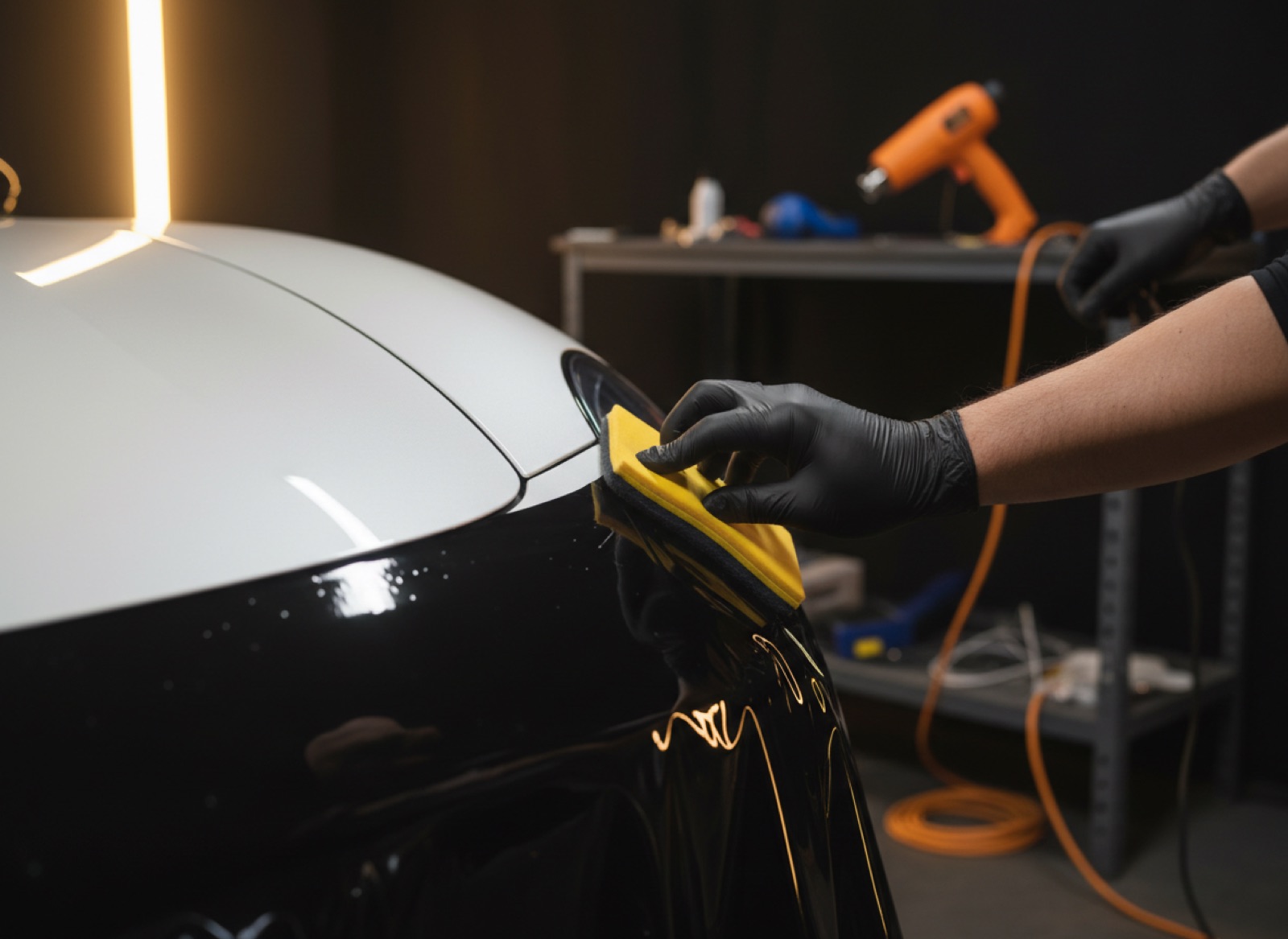
"How long will it last?" is the second question everyone asks about a vinyl wrap, right after "how much?" The honest answer is that it depends on the film, the color, which panels you're talking about, and how the vehicle lives. Here's what the manufacturer actually rates, what changes the real-world number, and what Wisconsin winters mean for your wrap.
We install Avery Dennison films. Avery's published product data sheet for its Supreme Wrapping Film (SW900) lists expected outdoor durability by film type, and it draws a big distinction between vertical and horizontal surfaces. For our climate zone, the data sheet lists:
| Film type | Vertical surfaces | Horizontal surfaces |
|---|---|---|
| Standard colors | Up to 10 years | Up to 2 years |
| Black and white | Up to 12 years | Up to 3 years |
| Metallic and pearlescent | Up to 5 years | Up to 2 years |
| Color-flow (color-shift) | Up to 4 years | Up to 1 year |
Two things to take from that:
These are manufacturer durability ratings under expected conditions, not a promise for every vehicle. In practice, most owners who care for their wrap get several good-looking years out of a quality film, with horizontal panels being the part to watch.
UV is the main enemy of vinyl over time. A vehicle parked outside all day, every day, ages faster than one that lives in a garage. Garage parking is the single biggest thing you can do for a wrap's lifespan.
Strong degreasers, solvent-based cleaners and some bug and tar removers can stain or soften vinyl. Avery's own guidance calls for pH-balanced, non-abrasive cleaners. Automatic washes with spinning brushes can scuff the film and catch edges.
A pressure washer aimed straight at an edge or seam can lift the film. If you use one, keep the nozzle back and spray across edges, not into them.
These can etch or stain vinyl if they sit, especially in summer heat. Clean them off promptly.
This one is under our control. Film that's overstretched, edges that aren't properly tucked, and skipped post-heating are the most common reasons wraps lift early. That's why we decontaminate the paint, remove handles, badges and trim where needed, and post-heat every panel so the film holds its shape.
The good news first: quality wrap film is built for cold. Avery rates SW900 for a service temperature range of -50°F to 180°F, so a January cold snap isn't going to hurt a properly installed wrap by itself. The things to watch are what comes with winter.
Salt and brine dry into a crusty film that's abrasive when wiped and keeps working on edges and seams. Rinse the vehicle regularly through the winter, paying attention to the lower panels, rockers and behind the wheels. Our road salt winter guide covers the routine we recommend for paint, and most of it applies to wraps too.
Keep the scraper on the glass. Never scrape ice off wrapped panels. Use a soft snow brush or a foam snow rake to push snow off the hood and roof, and let the defroster handle the rest.
Wash on milder days when you can, and avoid blasting hot water on frozen panels. A touchless wash is a reasonable winter option when hand washing isn't practical; just let edges be.
Wrap film has a minimum application temperature. Avery calls for at least 50°F on flat surfaces and 60°F on complex curves. That's why every wrap we do is installed indoors in our studio, where the vehicle and the film can be brought to temperature properly. A wrap installed cold in a driveway is a wrap that's going to lift.
Want it even easier? A ceramic coating made for vinyl adds a slick, hydrophobic layer that helps salt, grime and water sheet off and makes every wash faster.
Signs a wrap is near the end of its life include fading or chalking on the hood and roof, cracking, and edges that keep lifting. Don't wait too long. Vinyl that's been left on well past its life becomes brittle and harder to remove, and it can take more time and care to get off cleanly. A professionally removed wrap on healthy factory paint should come off without damage.
If you're deciding between a wrap and a respray, our vinyl wrap vs. paint comparison walks through cost, resale and when each one makes sense. When you're ready to look at colors, visit our vinyl wraps page, call (715) 864-4827, or request a quote. We'll go over film options and the expected lifespan of the exact film you choose before any work starts.
Serving Eau Claire and the surrounding area. We usually respond the same day.
Book a Consultation