
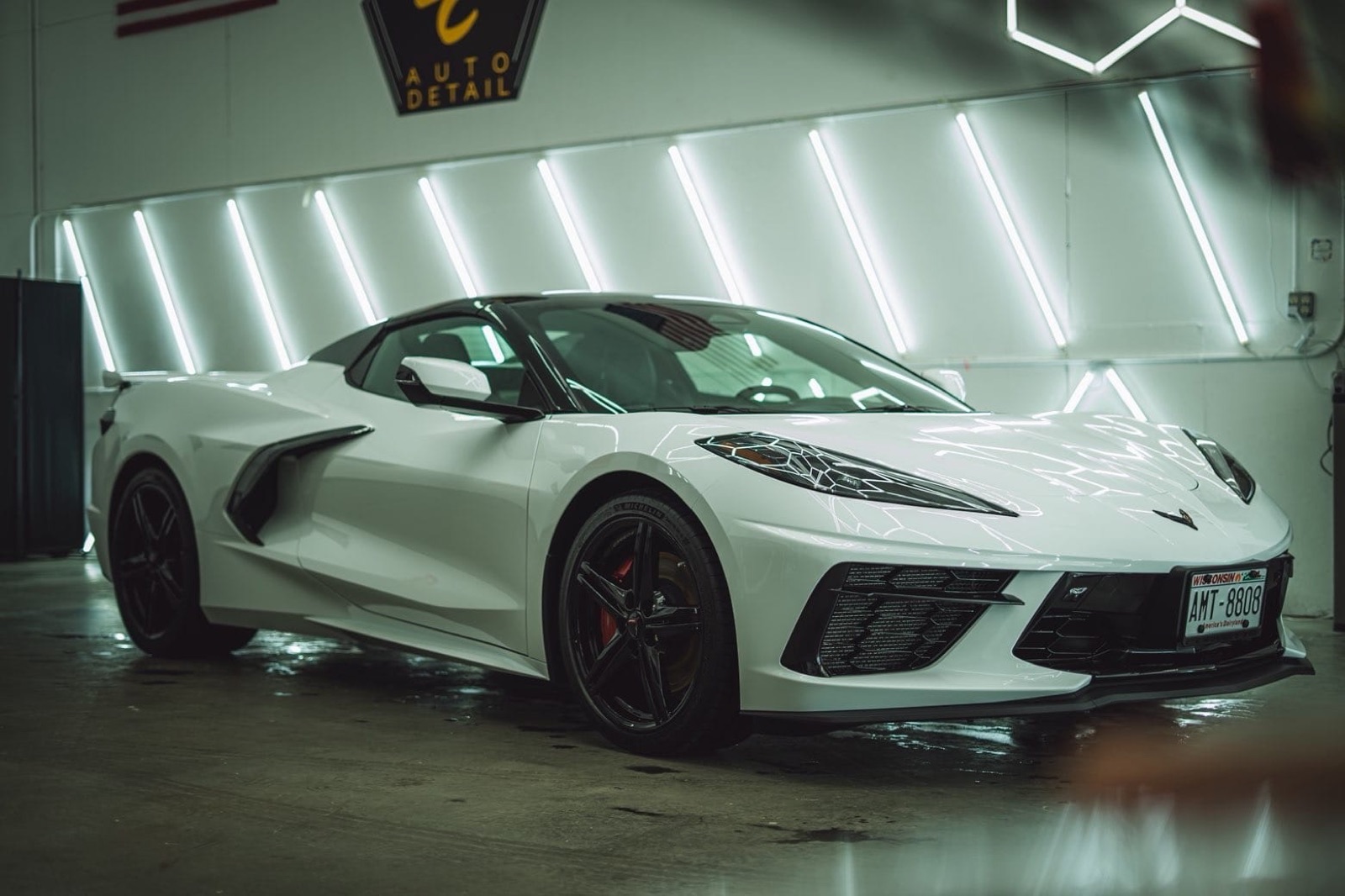
Three products, three price points, and an industry that has done a poor job explaining the difference. Ask five shops what you need and you will get five answers, most of them shaped by whichever service that shop happens to sell.
We install all three. That does not make us neutral, but it does mean we have no reason to talk you out of the one we do not offer. Here is what each of these actually is, what it genuinely does, and how to decide which one belongs on your vehicle.
Wax is the oldest answer to the problem. Natural carnauba, or a synthetic polymer sealant, sits on top of your clear coat as a thin removable film. It fills in microscopic texture, adds depth and gloss, and gives water something to bead on.
What it does well: gloss, warmth, and depth, particularly on dark paint, where a good carnauba still looks better than anything else. It is cheap, it is fast, and anyone can apply it in a driveway.
What it does not do: last. A wax is a sacrificial layer by design, measured in weeks to a few months. Detergent strips it, UV degrades it, and Wisconsin road salt eats it quickly. It offers essentially no chemical resistance and zero impact resistance.
Who it is right for: garage-kept weekend cars, show prep, and anyone who enjoys the ritual of doing it themselves every six weeks. As a protection strategy for a vehicle that sees winter here, it is not one.
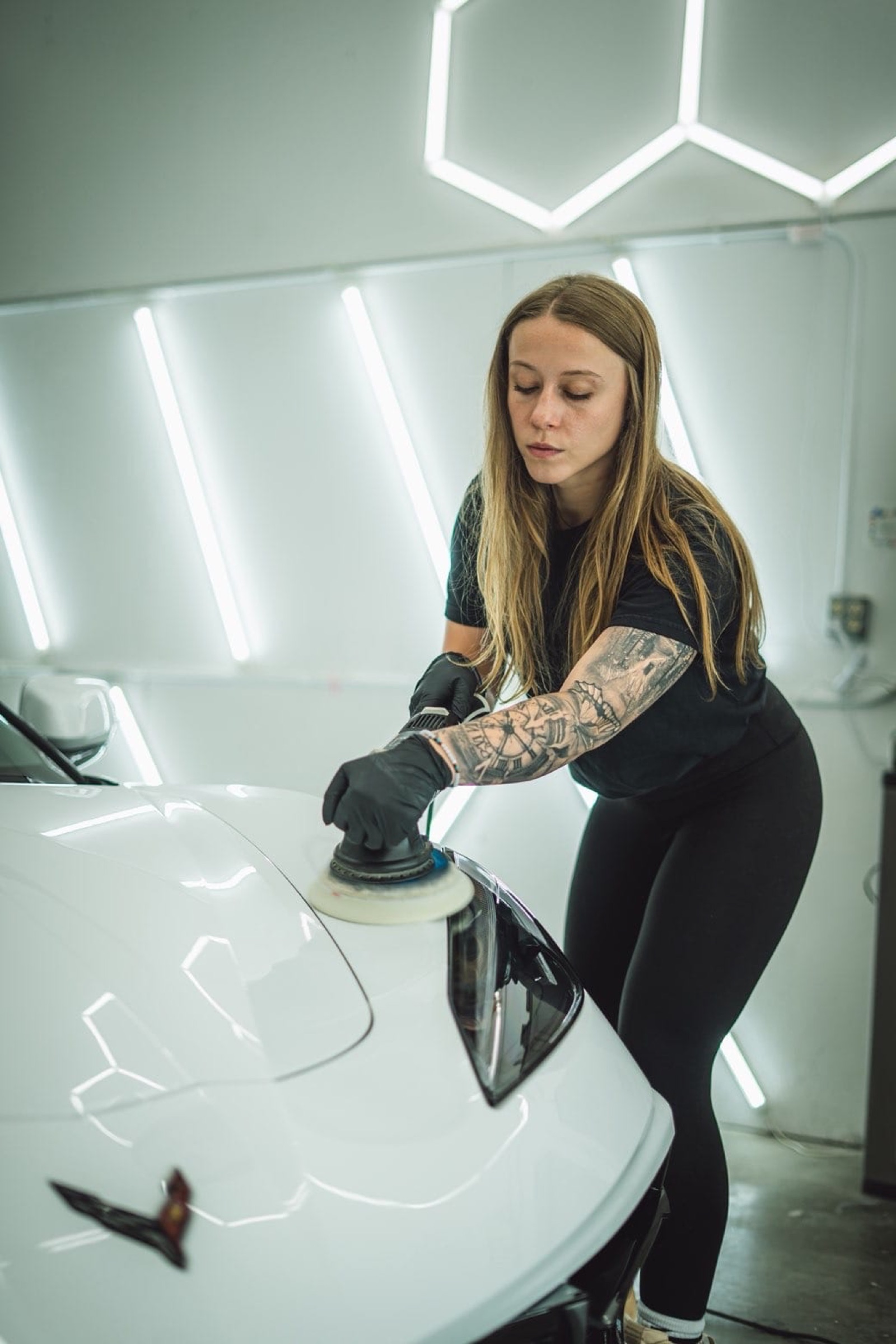
A ceramic coating is a liquid polymer, usually silica-based, that cures into a hard, transparent layer chemically bonded to your clear coat. It is not sitting on the paint the way wax does; it has become part of the surface, which is why removing it requires abrasion rather than detergent.
What it does well:
What it does not do: stop physical damage. This is the single biggest misconception in the industry, and some marketing has actively encouraged it. A ceramic coating is a few microns thick. It will not stop a stone off a gravel truck, it will not prevent a door ding, and it is not scratch-proof, it is somewhat more scratch resistant, which is a different claim.
Who it is right for: almost any daily driver in this climate, and the default recommendation for a new vehicle. If you are going to do one thing, this is usually the one thing.
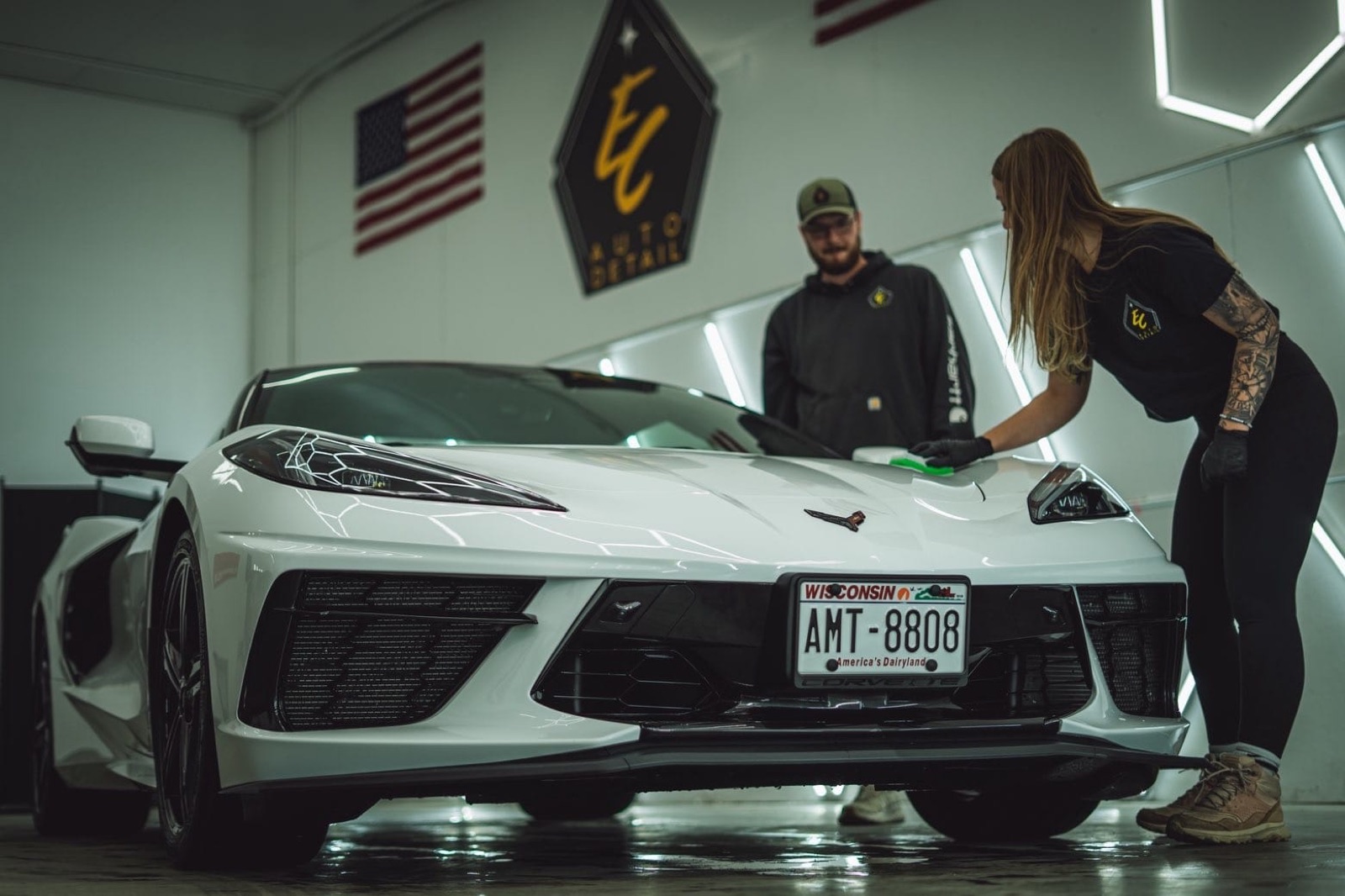
PPF is a thermoplastic urethane film, several thousandths of an inch thick, applied over the painted surface. Unlike the other two, it is material, an actual physical layer that absorbs impact your paint would otherwise take.
What it does well:
What it does not do: come cheap, or go on invisibly by accident. PPF is the most expensive option and by far the most installation-dependent. A poorly installed film with lifted edges, visible seams, or trapped contamination looks worse than unprotected paint. This is a service where the installer matters more than the brand.
Who it is right for: anyone who drives highway miles, anyone with a vehicle whose paint is expensive to repair, and anyone who has already paid to fix a chipped hood once and does not intend to do it again.
Longevity: wax, weeks to months. Ceramic coating, two to five years. PPF, up to about ten.
Rock chip protection: only PPF. Wax and ceramic offer none.
Chemical and salt resistance: ceramic coating is strongest per dollar. PPF protects whatever it covers. Wax, minimal.
Ease of washing: ceramic coating wins clearly.
Gloss: all three add it. Carnauba still has a particular warmth on dark paint that coatings do not quite replicate; coatings deliver a sharper, glassier reflection.
Cost: wax is the cheapest and the most temporary. Coating is a mid-range one-time investment. PPF is the largest outlay and the longest horizon.
Whatever you choose, what goes underneath it decides the result.
Coatings and film are transparent. They do not hide swirl marks, etching, or oxidation; they magnify them and then lock them in for the life of the product. Applying a five-year coating over a finish full of wash scratches means committing to five years of looking at those scratches.
This is why serious installations start with decontamination and, where the paint warrants it, paint correction to level the clear coat first. On a brand-new vehicle it might be a single light polishing stage. On a three-year-old daily driver it is usually more. Either way, a shop that quotes you a coating without ever looking at your paint under proper lighting is quoting you a disappointment.
New vehicle, daily driven in the Chippewa Valley: ceramic coating over the whole car, plus PPF on the leading edges, hood, fenders, mirrors, A-pillars. The film handles impact where impact happens; the coating handles chemistry everywhere else.
Interstate commuter, Eau Claire to Menomonie or the Twin Cities: full front PPF package is the highest-value spend you can make. Your front end is taking sustained abrasive damage that no coating addresses.
Three-to-five-year-old daily driver: correction first, then a coating. Get the finish back to sound condition before locking anything in. This is the single most common job we do, and the before-and-after surprises people.
Garage-kept weekend car: a coating still makes sense for the ease of maintenance, but this is the one case where a wax routine is genuinely defensible if you enjoy it.
Work truck: coating plus rust prevention underneath. The paint is not the asset here; the frame is.
The framing of the question is a little wrong. These are not three answers to one problem; they are three answers to three different problems. Wax is cosmetic. Ceramic coating is chemical defense. PPF is physical armor.
The best protection package on most vehicles uses two of them together: film where things hit, coating over everything else. That combination is common on the cars that still look new after five Wisconsin winters.
Bring the vehicle by 136 Race Street in Eau Claire and we will look at the paint under proper lighting, tell you what condition it is actually in, and give you a straight recommendation, including telling you when you do not need the expensive option.
Start with auto detailing, ceramic coating, or paint protection film to see what each service involves, or call (715) 864-4827. We serve Eau Claire, Altoona, Chippewa Falls, Lake Hallie, Menomonie, and Bloomer.
Serving Eau Claire and the surrounding area. We usually respond the same day.
Book a Consultation